or
What rules to use for a particular game or period you are playing?.
Some clubs from around the country play one set of rules for a period and all the members of that club play that set of rules that the club has chosen to play. The advantage is that anyone can play anyone in the club with little notice and the game on the night will flow fairly easily and turns will be taken quickly and should get a result within the evening. Any “grey” areas or rule queries are kept down to a minimum due to everyone knowing the rules and “umpires” a plenty. The downside is that any potential new members get railroaded to play that set as played by the club, although he/ she may have all the rules, army lists and supplements, they basically have to start again by Buying, reading and learning a new system and probably adjusting their own army. The advantage is lots of opponents.and umpires around on a club evening.
We at the Warlords are not the above club, why is this?. Well I will start by looking at the background of our members, many who have joined many years ago, through a connection with Games Workshop or like myself and others have come from playing historical games. Some have come from playing board games, D&D, re-enactment, model making, reading (Fiction or Factual) and some none of the above.
Within these areas the strongest “bond” of one rule set to rule them all is obviously Games Workshop, who still adjust and amend rule to “tweek” certain armies to new product, which then brings with it a whole new expense of re-buying all the literature you have already bought but is now out of date. You have admire their marketing!. Then there are middle ground sets where two or more sets are used within a period like Flames of War, BlitzKrig Commander and Panzer Marsch, Rapid Fire for WWII and for Napoleonic we play Shako and General de Brigade, American Civil War rules like Johnny Reb, Brother against Brother . Then we have the rest where there are a plethora of rule sets are used. Last but not least there is the rule set graveyard, purchased, read sometimes tried out and then put at the back of the cupboard to end its life in the recycle box.
With so many rules on the market which ones are the best?. What makes a good set of rules?. Does playability take preference to historical accuracy, i.e. quick to learn, fast play but lacking in subtleties of troop type or vehicle. Fast play rules have their drawbacks but if they are quick to learn are you likely to get more opponents? They allow people to “dip” their toes into a new period, by skimming the surface of the era in question.
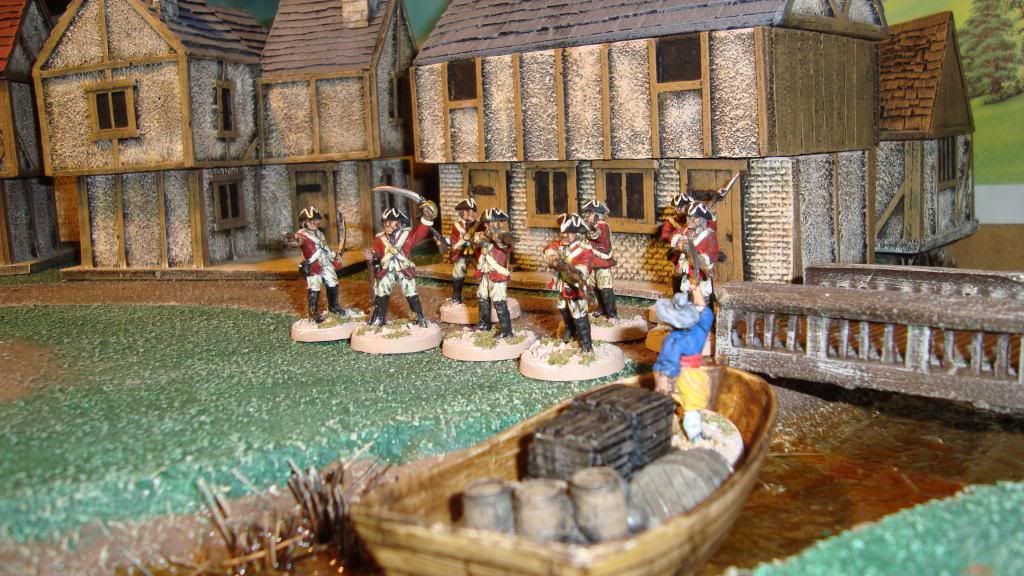 |
| The game is up! |
Before Rapid Fire came along I had never played WWII, my periods were covered up to 1900 (when Queen Victoria died, here endeth wargaming!). I had tried Command Decision, but as a freshman new nothing of the period and got no advice from the members I was playing with and got a sound thrashing, I have never played those rules or that player since.
Then Barney came down the club and suggested Rapid Fire, and we have played them (with a few house rules) for possibly ten plus years-ish. As time went on we wanted something more from the game but were not sure what it was that we wanted. So we bought various rule sets skirmish, platoon, Company, Battalion, Divisional and even Army levels. We found a comfortable medium in Panzer Marsch Playability of Rapid Fire (Panzer Marsch were written ten years prior to the release of Rapid Fire by the same wargames club) but with a great anti-tank system, which is a little more believable than Rapid Fire (Stuarts taking out Tigers!!!). Also the morale is an important element, which makes you take woods/buildings as you move across the battlefield. Would you just advance passed a wood without sending in some troops to reconnoitre it? It could be full of the enemy waiting to attack you in the rear (ooh err matron). Unfortunately others in our shallow end don’t like the rules (I can’t see why) and just refuse to play them, but that’s OK. each to their own as they say. So on a club night we play Rapid Fire and when we play against each other we play Panzer Marsch.
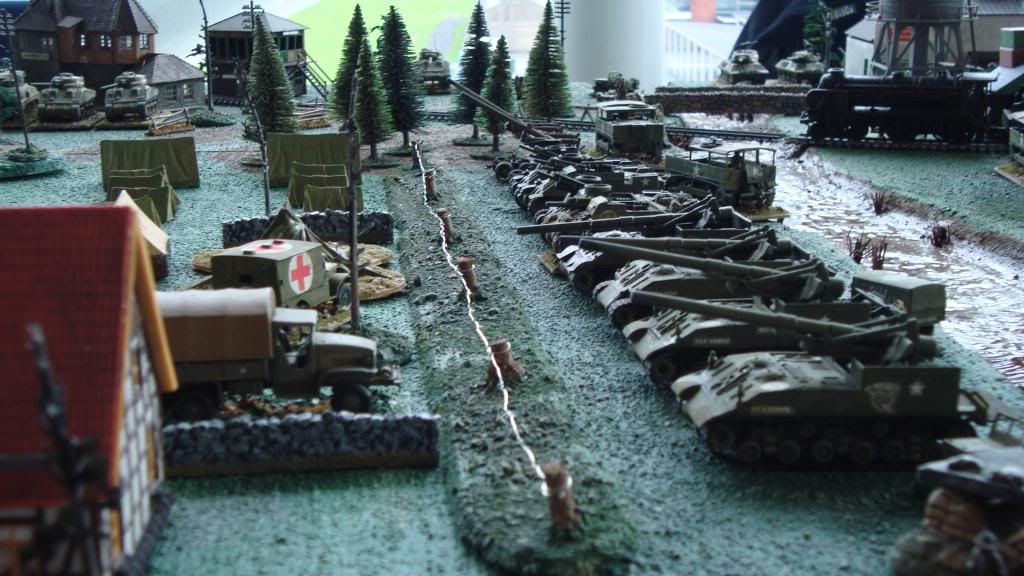 |
| Warlords WWII Ardennes game did the shows last year |
Other periods have the same effect as above, I think Napoleonic battles should be at least Divisional size and so do not partically enjoy General de Brigade but prefer to play Shako which covers much larger battles as well. We can play Waterloo in an evening with Shako Large Battle supplement. With American Civil War rules I prefer Johnny Reb II. Fire & Fury came out a few years ago which gained a lot of interest in the competiton circuit, so Johnny Reb II became III which all who played it after having played Johnny Reb II said they had tried to make them similar to Fire & Fury. I had never played JR III as I was happy with JRII . I have played huge games with Fire & Fury and they work quite well.
Principles of War is not only a good colonial set of rules but actually work well for other horse & musket periods like ACW, Franco- Prussian. The rules comes with army lists in the back of the book, but you can buy other army books which cover all the conflicts from Waterloo to Mons. PoW also do Napoleonic rules which I have played a couple of times and seem quite good.
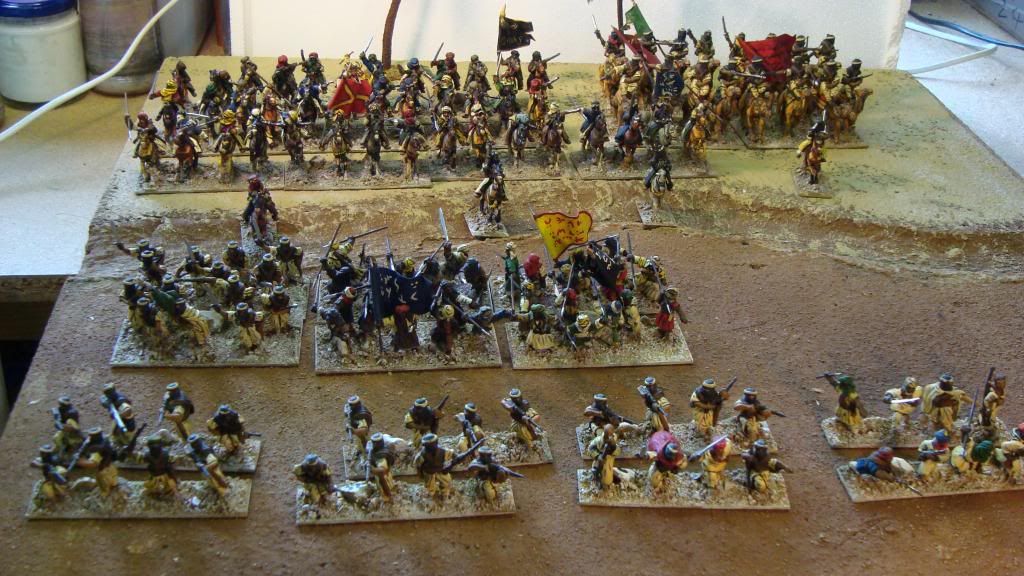 |
| A POW Arab army that fought my French Foreign Legion |
Pike and Shot period rules, which GW released a few years back (although I have not played them so cannot comment on them) I use the early Wargames Foundry backed rules 1644, but have just downloaded Victory without Quarter (to see how they play)
The above ramblings are my own thoughts, many other club members have their preferred set of rules and their reasonings are their own, but it is not for me to say which rules are correct for a particular period, I like others have my preferences.
 |
| Every schoolboy's inspiration, HMS Victory |


